

What Happened
Remote work is now a permanent fixture across industries, and HR teams in 2025 are still scrambling to manage distributed employees effectively. The challenge is no longer about technology or logistics. It is about communication. Organizations that figured this out early are pulling ahead, while those still treating remote management like in-office management with video calls are losing people and performance at the same pace.
The Communication Angle
Here is the lesson, stated plainly: remote work does not create communication problems. It exposes the ones you already had.
When everyone sits in the same building, bad communication habits get papered over by proximity. You can read body language. You can catch someone in the hallway. You can tell from a glance across the room whether your message landed. Remove all of that, and suddenly your vague instructions, your ambiguous feedback, and your "my door is always open" management style collapse completely. Distance does not break teams. Weak communication does.
The managers succeeding with remote teams right now share one specific habit: they communicate in writing with the same precision they would use in a legal document, and they speak with the same warmth they would bring to a one-on-one lunch. That combination is not natural for most people. It has to be built. The written word carries your intent without your tone, your expression, or your timing. That means every message needs to do more work. If your Slack message could be read two ways, it will be read the wrong way.
The second thing top remote managers do is replace frequency with clarity. The instinct, when you cannot see your team, is to schedule more check-ins. That is the wrong move. More meetings do not equal better communication. They equal more noise. What actually works is fewer touchpoints with sharper agendas. Tell people exactly what you need from them before the call. Tell them exactly what you decided after the call. Give them no reason to wonder where things stand.
The third piece is feedback, and this is where most remote managers fail completely. Feedback delivered over text, without context, without warmth, and without a clear path forward is not feedback. It is confusion with a negative charge. If you are managing someone you cannot see, your feedback has to include three things every single time: what specifically happened, why it matters to the team or the goal, and what you want to see next. Skip any one of those three and you have not given feedback. You have given an opinion.
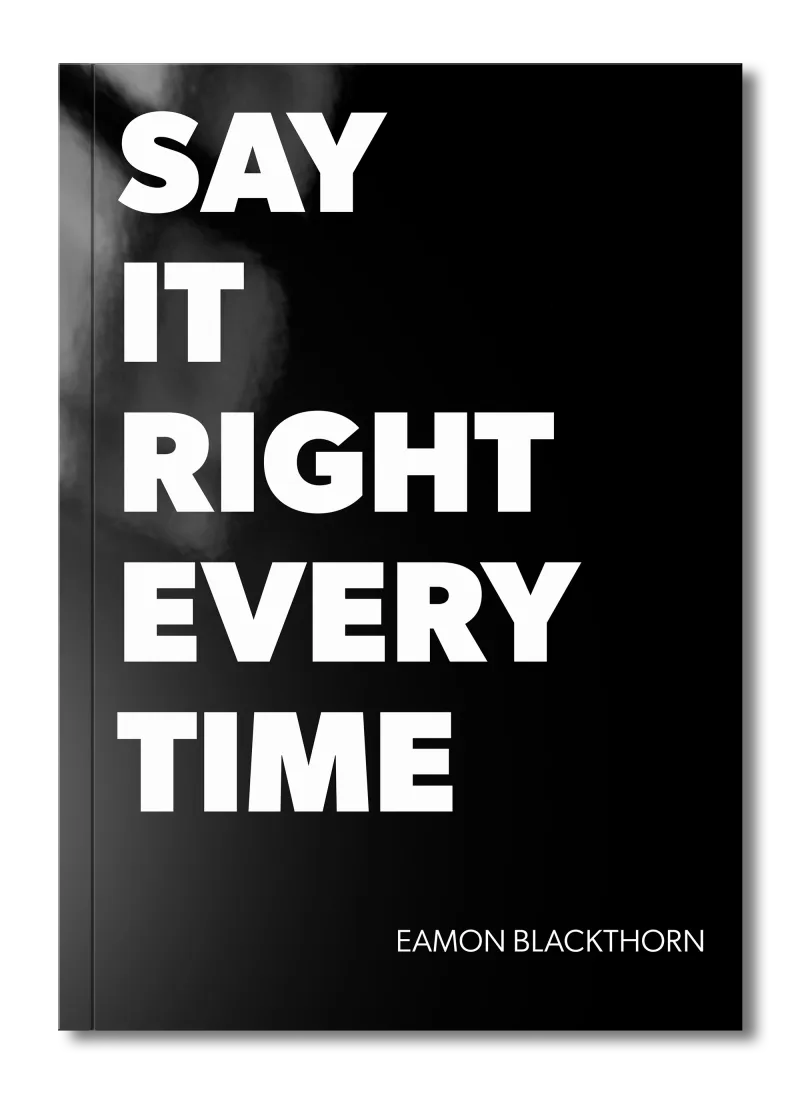
This is exactly the kind of scenario I break down in "Say It Right Every Time." The chapter on precision language gives you a framework for stripping the ambiguity out of your everyday communication so that your words produce the specific response you need, whether you are in the room or three time zones away. The principle applies everywhere, but it is most visible (and most punishing when ignored) in remote work.
Never Be Lost
for Words Again
Get word‑for‑word scripts for the conversations that shape your life, from job interviews and negotiations to difficult talks with family and partners, so you always know exactly what to say and how to say it.
Never Be Lost
for Words Again
Get word‑for‑word scripts for the conversations that shape your life, from job interviews and negotiations to difficult talks with family and partners, so you always know exactly what to say and how to say it.
Key Takeaway
Before your next remote check-in, write down the single clearest outcome you need from that conversation. Not a topic. Not a theme. One specific outcome. Then open the meeting by saying it out loud in one sentence. "I want to leave this call knowing your three priorities for the week and whether you have what you need to hit them." That one sentence does more for your remote team's clarity and trust than thirty minutes of unstructured catching up.