
What Happened
Educator and school administrator Ashford Kimani published a piece in The Mt Kenya Times arguing that leadership effectiveness depends less on how often a leader speaks and more on the precision and timing of that speech. He made the case that silence is an active tool, not a gap to fill. The piece drew a direct line between verbal restraint and stronger team cultures.
The Communication Angle
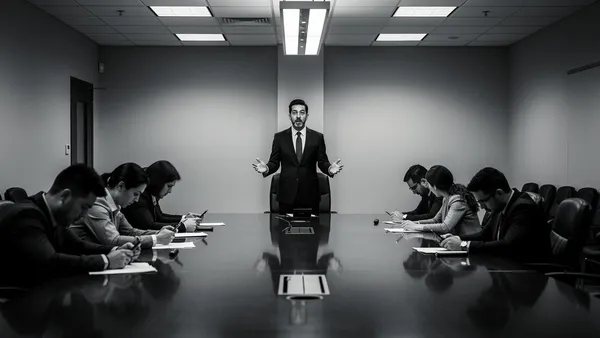
Here is the contrast that matters. Picture two leaders running the same team meeting. Leader A speaks constantly: answers questions before anyone finishes asking them, fills every pause, offers opinions on every agenda item. Leader B speaks four times in sixty minutes, each time with a clear point. Which team leaves the room thinking harder? Leader B's team. Every time.
Kimani's argument is correct, but most professionals underestimate why. It is not just that silence signals confidence (though it does). It is that constant talking trains your team to be passive. When you fill every gap, you remove the pressure on others to contribute. You are essentially doing their thinking for them, and they will let you. Over time, you have not built a team. You have built an audience.
The comparison becomes starker when you look at how leaders handle questions. The over-speaker answers immediately, often with more detail than necessary. The precise communicator responds with another question first: "What is your instinct on this?" That single move does three things. It shows respect for the other person's thinking. It buys the leader time to consider a better answer. And it builds the other person's problem-solving muscle. One habit, three results.
Timing is the piece that most leadership writing gets wrong, and Kimani touches on it correctly. A well-timed comment in a low-stakes moment carries the same weight as a formal announcement. A poorly timed remark, even a true one, can undo a week of goodwill. The leader who masters timing is not being strategic in a calculating way. They are being disciplined. There is a difference. Strategy is about winning. Discipline is about not losing ground through carelessness.
The practical gap is this: most people know they should talk less. They do it anyway because silence feels like failure in the moment. The fix is not willpower. It is preparation. Walk into every important conversation knowing exactly what you need to say and stopping once you have said it.
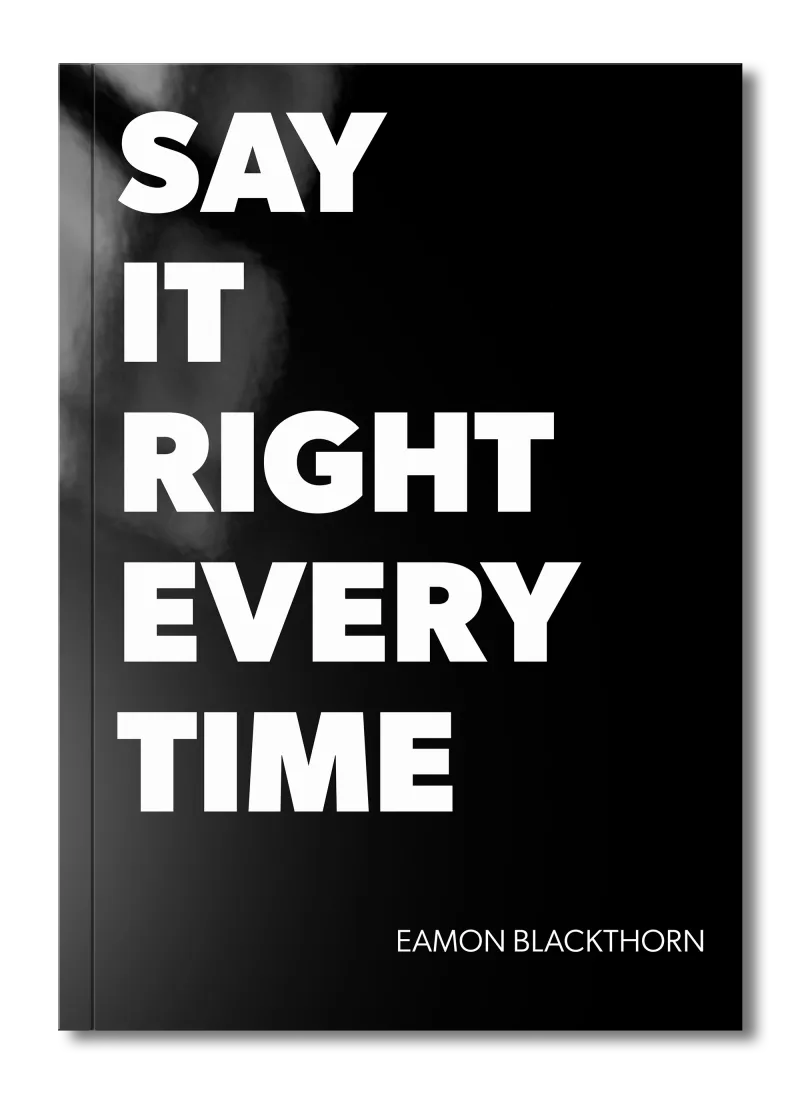
This is exactly the kind of scenario I break down in Say It Right Every Time. The chapter on strategic silence gives you a concrete framework for identifying the moments when speaking actually costs you authority rather than building it, and how to retrain the impulse to fill space with words before you have earned the right to use them.
Never Be Lost
for Words Again
Get word‑for‑word scripts for the conversations that shape your life, from job interviews and negotiations to difficult talks with family and partners, so you always know exactly what to say and how to say it.
Never Be Lost
for Words Again
Get word‑for‑word scripts for the conversations that shape your life, from job interviews and negotiations to difficult talks with family and partners, so you always know exactly what to say and how to say it.
Key Takeaway
Before your next team meeting, write down the one thing you absolutely must say. Just one. Commit to saying it clearly and then closing your mouth. Count the seconds of silence that follow. Do not fill them. What surfaces in that silence will tell you more about your team than anything you could have said.