

What Happened
Elders Limited, an Australian agricultural services company, held its Q4 2026 earnings call on November 15, 2026. CEO René Dedoncker and Group Finance lead Paul Rossiter addressed investors and analysts. Earnings calls like this one are high-stakes communication events: every word is recorded, scrutinized, and used to judge not just the numbers, but the people delivering them.
The Communication Angle
Here is the lesson every executive needs to hear before stepping onto an earnings call: your numbers tell investors what happened, but your words tell them whether to trust you.
Most executives treat earnings calls as a financial reporting exercise. They prep on the data and wing the communication. That is exactly backwards. Analysts already have the spreadsheets. What they are actually listening for is confidence, clarity, and whether the person in charge sounds like they understand their own business.
The most common failure on these calls is what I call the "data shield." An executive buries every answer in figures, ratios, and qualifications because they think precision sounds credible. It does not. It sounds like deflection. When a CEO rattles off six metrics in response to a simple question about growth strategy, the message investors actually receive is: "I am hiding behind numbers because I do not want to commit to anything." Specificity is not the same as clarity. You can be very specific and still say nothing.
The second failure is passive voice creep. Listen to any underperforming earnings call and you will hear phrases like "challenges were encountered" or "headwinds were experienced." Nobody encountered those challenges. The company did. The leadership did. The moment you strip the subject out of a sentence, you strip accountability with it. Investors notice. They may not be able to name the technique, but they feel the evasion in their gut and they mark you down for it.
What strong earnings call communication looks like is this: short declarative sentences, first-person ownership of both wins and losses, and a forward statement that is specific enough to be held to. Not "we expect to see improvement in key areas." That sentence means nothing. Instead: "We are targeting a 12% margin recovery in our core rural services division by mid-year, and here is what we are doing to get there." That sentence does three things at once. It shows command, it sets a benchmark, and it gives analysts something to track. That is a communicator doing their job.
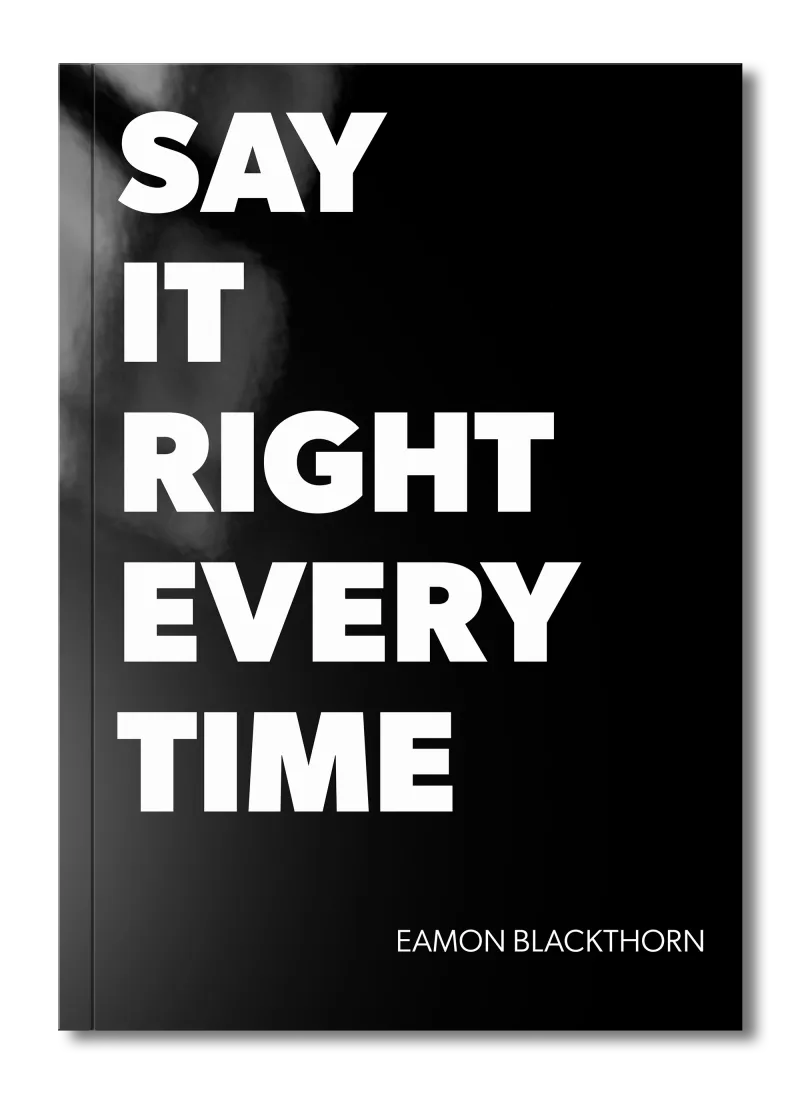
This is exactly the kind of scenario I break down in Say It Right Every Time. The chapter on accountability language gives you a framework for auditing your own speech patterns before high-pressure situations, so you stop communicating like someone who is covering themselves and start communicating like someone who is in charge. The difference is not just stylistic. It determines whether people follow you or simply tolerate you.
Never Be Lost
for Words Again
Get word‑for‑word scripts for the conversations that shape your life, from job interviews and negotiations to difficult talks with family and partners, so you always know exactly what to say and how to say it.
Never Be Lost
for Words Again
Get word‑for‑word scripts for the conversations that shape your life, from job interviews and negotiations to difficult talks with family and partners, so you always know exactly what to say and how to say it.
Key Takeaway
Before your next high-stakes presentation or investor update, strip out every passive construction from your prepared remarks. Go sentence by sentence. If the subject of the sentence is not your company, your team, or yourself, rewrite it. Own the action. Own the result. This one edit will make your communication sound more confident and more credible than any amount of polish or rehearsal.