

What Happened
Gallup's latest data reveals that employee engagement has dropped to its lowest point in over a decade. Workers are increasingly disconnected from their jobs, their teams, and the organizations they work for. The numbers point directly at one cause: managers are failing to communicate in ways that make people feel seen, valued, or motivated to bring their best effort to work.
The Communication Angle
Picture a Monday morning team meeting. The manager reads from a slide deck. Nobody asks questions. Everyone files out. By Friday, two people have quietly updated their resumes. This is not a morale problem. This is a communication collapse happening in slow motion, and most leaders never see it coming because they confuse talking with connecting.
Gallup's findings are not surprising to anyone who works closely with leadership teams. The root problem is almost always the same: leaders speak at their people instead of to them. There is a fundamental difference between those two things. Speaking at someone means you are delivering information. Speaking to someone means you are creating a conversation. One produces compliance at best. The other produces commitment. Engagement lives entirely in the second category.
Here is what bad communication looks like in practice. A manager announces a new initiative without explaining why it matters to the person sitting across from them. They ask "any questions?" and move on after three seconds of silence. They give feedback once a year in a formal review instead of consistently throughout the year. Every one of these choices sends the same message to employees: you are a resource, not a person. People do not stay engaged when they feel like a resource.
The fix is not complicated, but it does require intention. Great managers ask specific questions, not vague ones. Not "how are things going?" but "what is one thing slowing you down right now that I could actually remove?" That kind of question signals three things at once: I am paying attention, your obstacles are my business, and I have the authority and willingness to help. That is an enormous amount of trust built in a single sentence. Trust is the fuel that keeps engagement alive.
Leaders also need to stop treating vision-setting as a one-time speech and start treating it as a daily practice. People need to hear why their work matters more than once a year at an all-hands meeting. They need to hear it in the small moments. In the hallway. In the one-on-one. In the quick Slack message that says "that report you sent changed how we approached the client conversation today." Specificity is what makes communication land. Vague praise bounces off people. Specific recognition sticks.
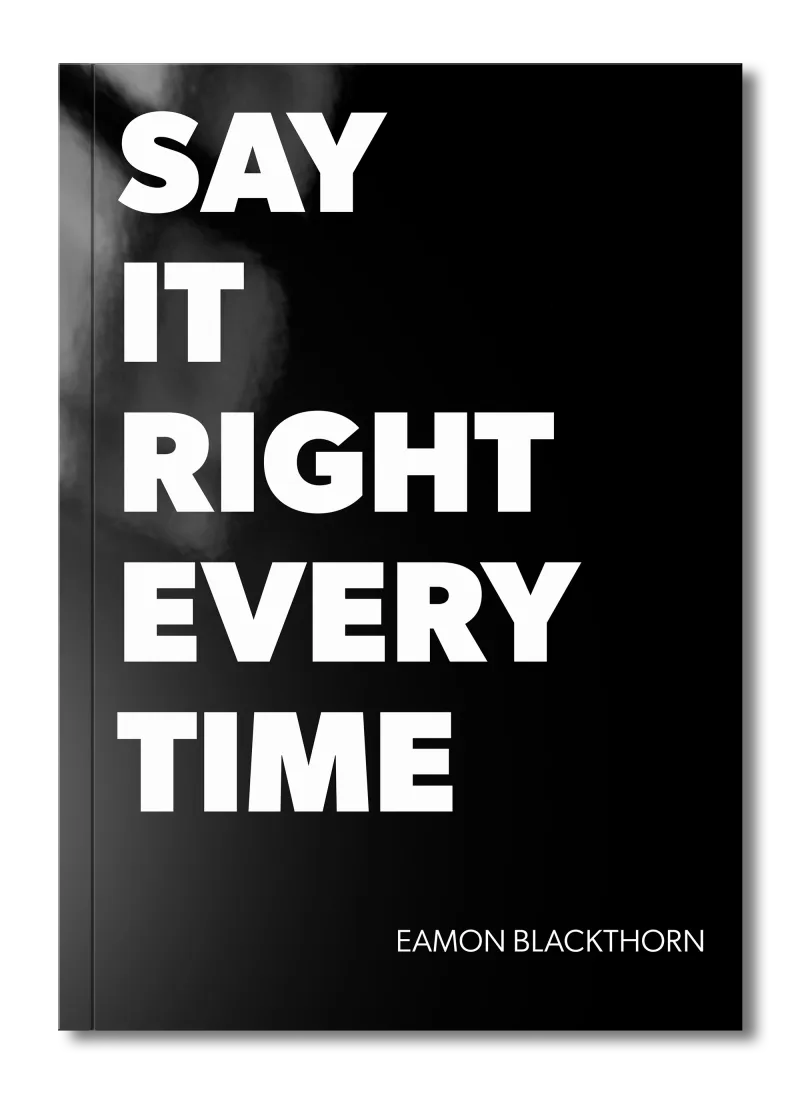
This is exactly the kind of scenario I break down in Say It Right Every Time. The chapter on feedback and recognition gives you a framework for delivering specific, timely praise that actually changes behavior and builds loyalty. Most leaders think they are already doing this. The chapter shows you, clearly, why they are not and what to say instead.
Never Be Lost
for Words Again
Get word‑for‑word scripts for the conversations that shape your life, from job interviews and negotiations to difficult talks with family and partners, so you always know exactly what to say and how to say it.
Never Be Lost
for Words Again
Get word‑for‑word scripts for the conversations that shape your life, from job interviews and negotiations to difficult talks with family and partners, so you always know exactly what to say and how to say it.
Key Takeaway
Before your next one-on-one with a direct report, write down one specific thing they did in the past two weeks that made a measurable difference. Name the action, name the result. Then say it out loud in the meeting before you get to anything else on your agenda. Do this every single week and watch what happens to their energy over the next 90 days.