

What Happened
Hilton has earned recognition as the world's best workplace, and CEO Chris Nassetta is pointing directly at one cause: years of deliberate, consistent investment in the people who work there. Nassetta framed this not as a campaign or a cultural initiative, but as a long game. The company did not arrive here quickly, and Nassetta is not pretending otherwise.
The Communication Angle
Here is what Nassetta got exactly right: he gave credit with precision. He did not say "our amazing team" or wave at the whole organization with a vague gesture of gratitude. He named the mechanism. Sustained investment in employees over time. That is specific. That is credible. And it is the difference between a leader who sounds genuine and one who sounds like a press release.
Most executives, handed a world-class award, default to celebration language. They talk about culture as if it appeared like weather. Nassetta did the opposite. He explained the cause. He said, in plain terms, that this result came from a specific approach applied over a long period. That kind of statement builds trust because it teaches the audience something. It respects their intelligence. It says: here is how this actually works.
The marathon metaphor is worth examining too, because metaphors are tools, not decoration. "Marathon, not a sprint" is familiar to the point of being worn out. But Nassetta is using it in a context where it carries real weight. He is speaking to employees, to job seekers, to business media. All three groups need to believe that Hilton's culture is durable, not a mood. The metaphor does that job efficiently. Sometimes a familiar frame is familiar because it works.
What this also does, quietly, is set expectations for what comes next. Nassetta is not just explaining the past. He is committing to a future. When you publicly credit long-term investment as the reason for your success, you have just told every stakeholder watching that you will continue that investment. That is a public accountability move. Smart leaders use these moments to make forward commitments without sounding like they are making promises. Nassetta threaded that needle cleanly.
The lesson here is not about workplace culture. It is about how you talk about success when it arrives. Vague gratitude destroys credibility. Specific explanation builds it. The next time something goes right for your organization, resist the instinct to celebrate. Explain instead. Tell people what caused the win, and you will sound like someone worth following.
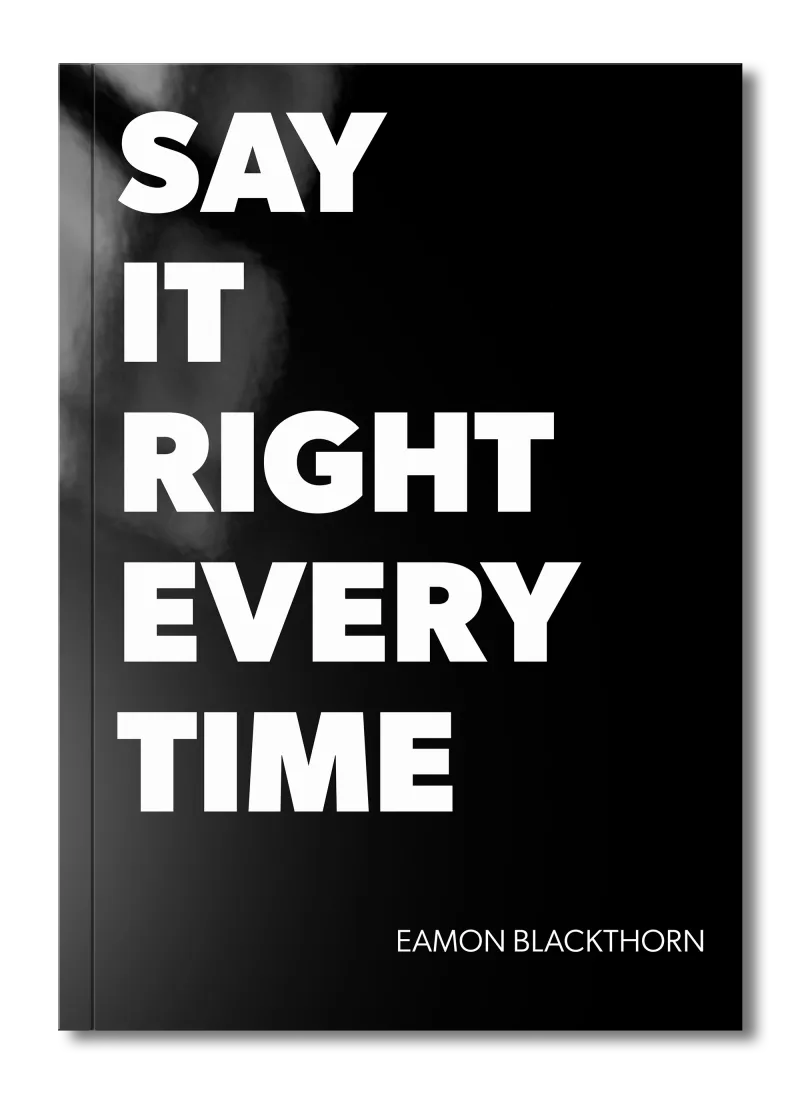
This is exactly the kind of scenario I break down in Say It Right Every Time. The chapter on credibility language gives you a framework for replacing vague success-speak with the kind of precise, causal language that actually lands with an audience. Nassetta's statement is a live example of what that chapter teaches. When you name the mechanism behind a result, you stop sounding lucky and start sounding competent.
Never Be Lost
for Words Again
Get word‑for‑word scripts for the conversations that shape your life, from job interviews and negotiations to difficult talks with family and partners, so you always know exactly what to say and how to say it.
Never Be Lost
for Words Again
Get word‑for‑word scripts for the conversations that shape your life, from job interviews and negotiations to difficult talks with family and partners, so you always know exactly what to say and how to say it.
Key Takeaway
The next time you are asked to explain a success, whether in a meeting, a presentation, or a media moment, write down one specific action that caused the result before you open your mouth. Not a value. Not a feeling. An action. Lead with that. "We won this client because we followed up three times when others stopped at one." That level of specificity is what separates leaders people trust from leaders people merely tolerate.