

What Happened
McKinsey recently published guidance on how boards and CEOs can work together more effectively. The piece identifies three core areas where the relationship between a company's top executive and its governing board tends to break down. The core argument is that stronger collaboration between these two groups produces better outcomes for the organization. This is not a new idea, but the execution of it remains a persistent problem in boardrooms worldwide.
The Communication Angle
Here is the lesson: power does not eliminate the need for clear communication. It makes it harder.
The board-CEO relationship is one of the most communication-dependent relationships in business, and one of the most neglected. Everyone assumes that because these are smart, experienced people, they will figure it out. They rarely do. What they figure out instead is how to tolerate each other while misalignment festers underneath.
The core problem is that boards and CEOs operate on different clocks and different information diets. The CEO lives in the daily reality of the business. The board shows up quarterly with questions shaped by headlines and reports. Neither side is wrong. But if nobody builds a communication bridge between those two realities, the relationship defaults to performance mode. The CEO performs confidence. The board performs oversight. And nothing honest gets said.
The fix is not more meetings. It is better ones. A CEO who sets the agenda for every board interaction controls the narrative, and not always in a good way. The best CEOs I have studied do something counterintuitive: they invite disagreement early. They surface the problem before the board has to ask about it. That move does two things. It signals confidence rather than defensiveness. And it turns the board from a jury into a resource. That is a communication shift, not a structural one.
For the board's side, the failure is usually in how they ask questions. Boards tend to interrogate rather than inquire. There is a difference. Interrogation puts the other person on trial. Inquiry opens a conversation. If a board member consistently frames questions as challenges, the CEO learns to prepare defenses instead of honest answers. You have now built a relationship optimized for self-protection, not problem-solving. That is a catastrophic outcome dressed up as governance.
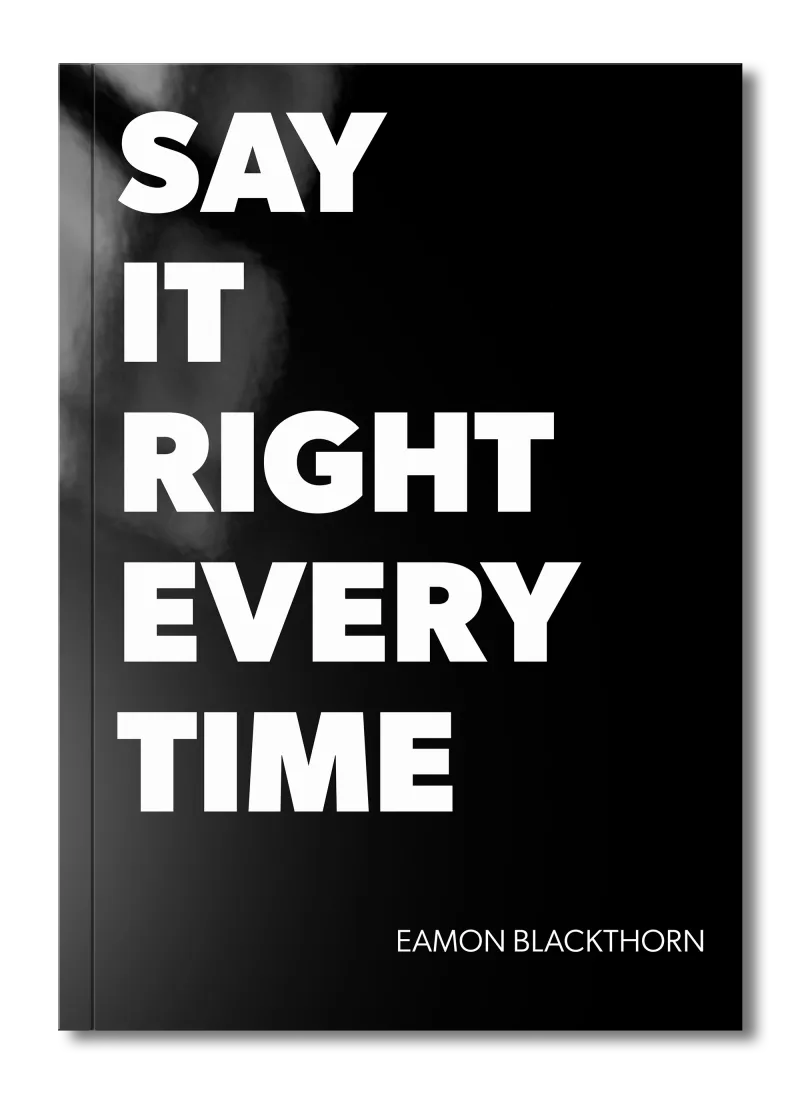
This is exactly the kind of scenario I break down in Say It Right Every Time. The chapter on speaking to authority figures gives you a framework for navigating conversations where the power dynamic creates pressure to perform instead of communicate. The chapter does not just tell you to "be honest." It shows you the specific sentence structures that signal confidence while delivering hard information, so you can tell a board something they do not want to hear without sounding like you are asking for permission to deliver bad news. That skill is the difference between a CEO who owns the room and one who is owned by it.
Never Be Lost
for Words Again
Get word‑for‑word scripts for the conversations that shape your life, from job interviews and negotiations to difficult talks with family and partners, so you always know exactly what to say and how to say it.
Never Be Lost
for Words Again
Get word‑for‑word scripts for the conversations that shape your life, from job interviews and negotiations to difficult talks with family and partners, so you always know exactly what to say and how to say it.
Key Takeaway
Before your next leadership update to a board or senior group, identify the one thing you are most tempted to soften or bury in good news. Lead with that instead. Put it in the second sentence of your opening. Watch how the entire dynamic of the room shifts when you stop managing perception and start managing the actual problem.