

What Happened
McKinsey released research examining how top-performing CEOs build and sustain relationships with stakeholders over the long term. The findings point to deliberate communication habits, not charisma or title, as the real differentiator. The best leaders treat relationship-building as a discipline, not an occasional priority.
The Communication Angle
Here is the question that McKinsey's research forces into the open: why do some CEOs keep stakeholders aligned for years while others constantly put out fires? The answer is not strategy. It is communication cadence and intentionality.
Most executives communicate reactively. They reach out when there is news, a crisis, or a quarterly report to defend. Stakeholders learn to associate that leader's voice with turbulence. Over time, they stop trusting the relationship and start bracing for impact every time the phone rings. That is a communication disaster hiding behind a business calendar.
The best CEOs do the opposite. They reach out before there is anything urgent to say. A quick call to a board member to share an early-stage observation. A direct note to a major investor acknowledging a market shift before it hits the news. These gestures send a clear signal: I am thinking about you when I do not need something from you. That single shift in timing builds more trust than any polished speech ever could.
There is a second layer here that most people miss entirely. It is not just when you communicate but what you admit. Top CEOs, according to this research, acknowledge uncertainty out loud. They say "I do not have the full picture yet" or "here is what we got wrong." This is not weakness. This is the most powerful trust-building move available to any leader. Stakeholders are not naive. They already know when something is uncertain or broken. A leader who names it first positions themselves as honest. A leader who avoids it positions themselves as someone to watch carefully.
The practical application is simple. Map your stakeholder relationships and ask yourself one honest question: when did I last reach out to each person when I did not need something? If you cannot remember, that relationship is running on borrowed time.
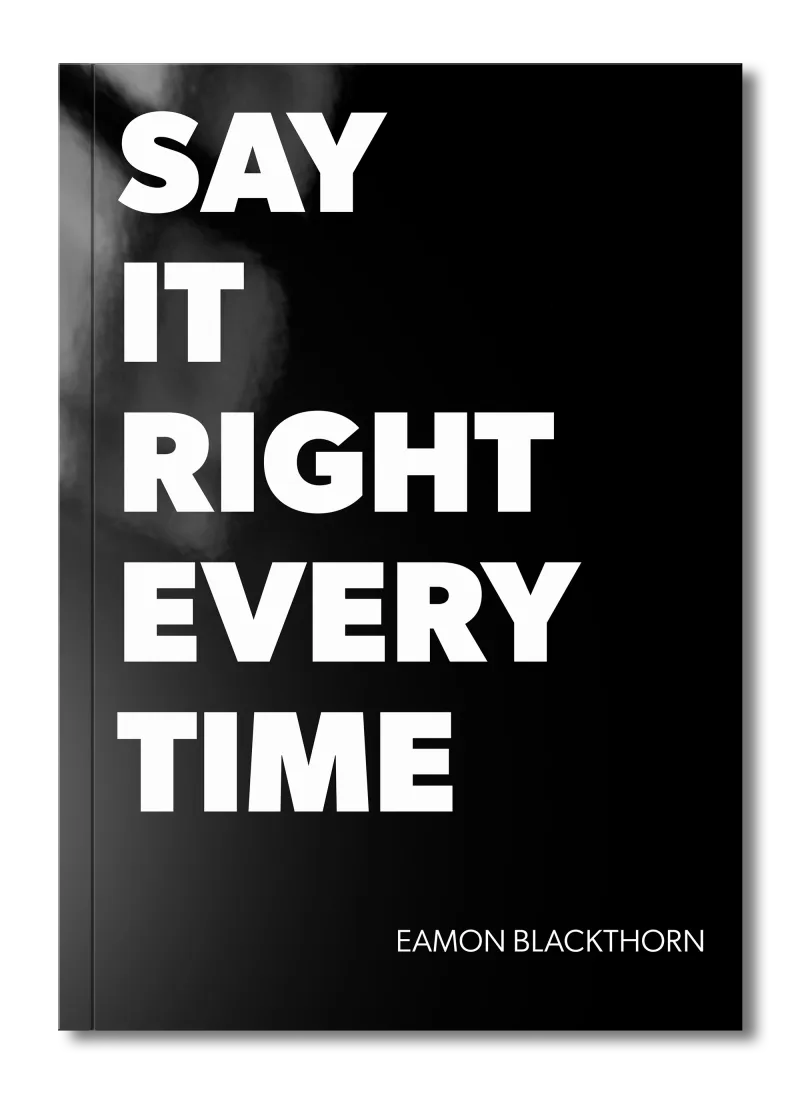
This is exactly the kind of scenario I break down in Say It Right Every Time. The chapter on proactive framing gives you a framework for initiating high-stakes conversations before pressure forces your hand. Most people wait until they have something to report. The leaders who build real loyalty speak up when it costs them nothing except a few minutes of thought. That is the habit that separates the trusted from the tolerated.
Never Be Lost
for Words Again
Get word‑for‑word scripts for the conversations that shape your life, from job interviews and negotiations to difficult talks with family and partners, so you always know exactly what to say and how to say it.
Never Be Lost
for Words Again
Get word‑for‑word scripts for the conversations that shape your life, from job interviews and negotiations to difficult talks with family and partners, so you always know exactly what to say and how to say it.
Key Takeaway
Before your next week starts, identify one key stakeholder you have only contacted reactively in the past 90 days. Send them a brief, direct message with one observation relevant to their priorities. No ask. No agenda item. Just proof that you are paying attention. Do this once a week with rotating stakeholders and within six months your communication reputation will be completely different.