

What Happened
Crowe Global published a detailed analysis on how companies rebuild trust after a public scandal. The piece examines the stages organizations move through when their reputation collapses, from initial crisis response through long-term recovery. It positions trust restoration not as a PR exercise but as a structured process requiring deliberate choices about accountability, transparency, and stakeholder communication.
The Communication Angle
Picture this: a company's name is trending, and not in a good way. The phones are ringing, journalists are waiting, and the board wants a statement in 20 minutes. What happens next determines whether that company is still standing in five years or becomes a cautionary tale in a business school case study.
Most companies get this moment completely wrong. They treat it like a legal problem rather than a human one. They issue statements written by lawyers that say everything except what people actually need to hear. The result is language so bleached of humanity that it reads like a terms-of-service update. Nobody trusts a robot apology. Nobody.
Here is what the research and real-world evidence consistently show: the companies that recover fastest are the ones that speak first, speak plainly, and accept specific responsibility. Not "mistakes were made." Not "we regret any concern this may have caused." Those phrases are trust accelerants. They make the fire burn hotter. The language that works sounds like a person talking to another person: "We did this. It was wrong. Here is exactly what we are changing." Three sentences. That structure works because it moves through the only sequence stakeholders will accept: acknowledgment, judgment, and action.
The second stage is where most recoveries stall out. After the initial statement, companies go quiet. They assume the storm will pass. It never does. Silence is not neutral. Silence communicates guilt, or worse, indifference. The organizations that rebuild trust successfully stay in regular contact with their audiences during the recovery process. They give progress updates. They name names of who is accountable for the fixes. They invite scrutiny rather than deflecting it. That is counterintuitive, but it is exactly right. Transparency at this stage is not vulnerability. It is strength.
The final layer is the hardest: patience. Trust is rebuilt in small deposits over a long time. A single great statement does not restore a broken reputation. What does the work is consistent behavior, communicated consistently. Every announcement, every earnings call, every public appearance during the recovery period needs to reinforce the same core message. Leaders who shift tone, dodge questions, or let their messaging get inconsistent during this window undo months of progress in a single interview.
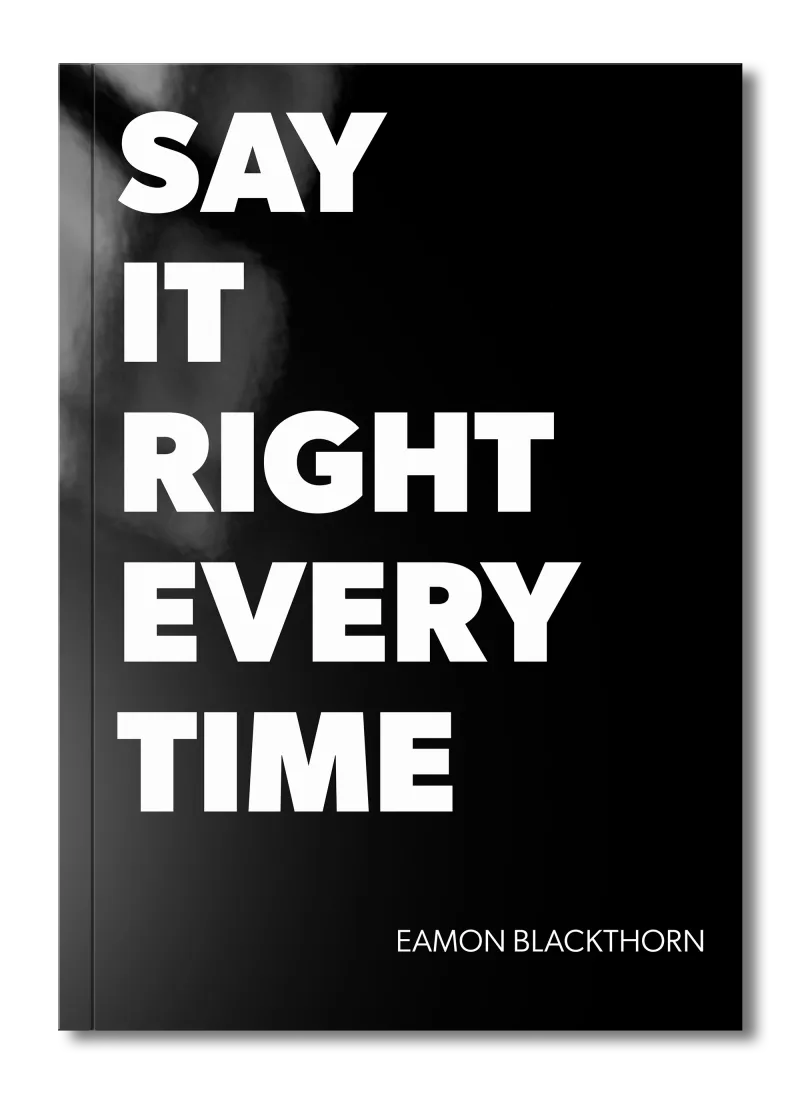
This is exactly the kind of scenario I break down in Say It Right Every Time. The chapter on high-stakes apologies gives you a framework for structuring accountability statements so they land as genuine rather than rehearsed. Most people skip the hardest part, which is naming the specific failure out loud. That chapter shows you why that step is not optional and how to do it without creating additional legal or reputational exposure.
Never Be Lost
for Words Again
Get word‑for‑word scripts for the conversations that shape your life, from job interviews and negotiations to difficult talks with family and partners, so you always know exactly what to say and how to say it.
Never Be Lost
for Words Again
Get word‑for‑word scripts for the conversations that shape your life, from job interviews and negotiations to difficult talks with family and partners, so you always know exactly what to say and how to say it.
Key Takeaway
The next time your organization needs to respond to bad news, write the word "because" on a piece of paper before you draft anything. Every claim of accountability must be followed by a specific explanation. Not "we apologize for the disruption." Instead: "We apologize because our oversight process failed at this specific point, and here is the person now responsible for fixing it." The word "because" forces specificity, and specificity is the only currency that buys back trust.