
What Happened
Astrophysicist Erin MacDonald serves as a science advisor for the Star Trek franchise and other Hollywood productions, working to keep fictional science grounded in real physics. In a recent interview, she discussed how she landed this unusual role and also copped to the moments where scientific accuracy slipped through the cracks on her watch. Her candor about both her wins and her failures is worth paying attention to.
The Communication Angle
Here is the lesson: owning your failures publicly makes you more credible, not less. Most professionals spend enormous energy hiding their mistakes. MacDonald does the opposite, and it is the foundation of her entire professional reputation.
Think about what she actually did in this interview. She did not deflect. She did not say "well, it's a creative medium" or "the writers have final say." She said, in effect, those flubs happened and they bother me. That specificity is doing heavy lifting. When you name your mistake precisely, people stop wondering what else you might be hiding. Vague apologies feel like cover-ups. Specific ones feel like honesty.
There is a second layer here that most people miss. MacDonald also explained her role clearly: she is a bridge between scientific accuracy and storytelling demands. That is a hard job to describe without sounding either arrogant (I am the science police) or useless (I just advise, decisions are above me). She threaded that needle by focusing on function, not title. She did not say "I am a consultant." She described what she actually does, which is translate complex physics into creative decisions a TV writer can use. That is a communication skill most professionals never develop. They define themselves by their credentials. MacDonald defines herself by her usefulness.
The third layer is consistency of voice. Whether she is talking about gravitational waves or Klingon warp drives, she stays at the same level of enthusiasm and plain language. There is no gear-shift where she suddenly becomes technical and distant. That consistency builds trust because the audience never feels like they are being managed or talked down to.
Apply this directly. If you are ever asked to explain what you do, skip the job title. Describe the problem you solve and for whom. If you are ever asked about a failure, name it exactly. The more specific you are, the more trustworthy you become. And if you are bridging two worlds (technical and creative, clinical and commercial, legal and operational), define yourself by the bridge, not by which side you came from.
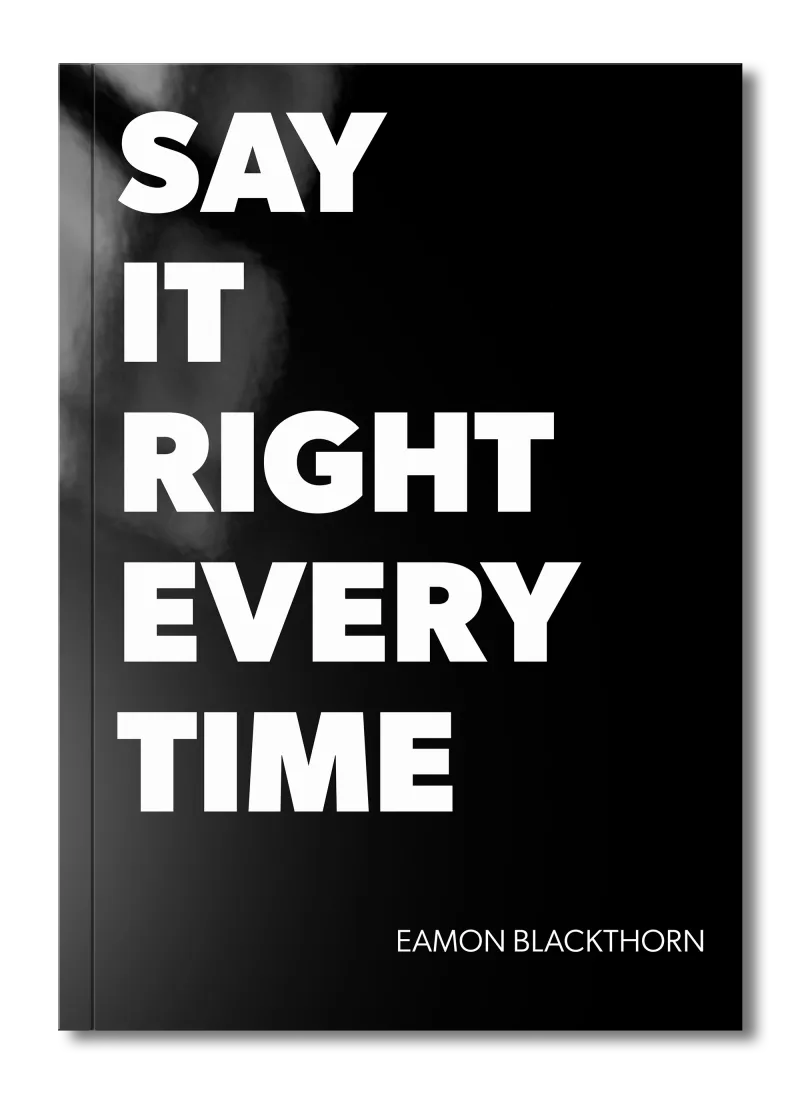
This is exactly the kind of scenario I break down in Say It Right Every Time. The chapter on credibility under pressure gives you a framework for turning public mistakes into trust-building moments. The instinct is always to minimize. The technique that actually works is precision. MacDonald is a live case study in that principle, and she probably does not even know she is doing it.
Never Be Lost
for Words Again
Get word‑for‑word scripts for the conversations that shape your life, from job interviews and negotiations to difficult talks with family and partners, so you always know exactly what to say and how to say it.
Never Be Lost
for Words Again
Get word‑for‑word scripts for the conversations that shape your life, from job interviews and negotiations to difficult talks with family and partners, so you always know exactly what to say and how to say it.
Key Takeaway
Before your next introduction or bio update, cut your job title entirely and write one sentence that answers this: "I help (specific person) do (specific thing) by (your specific method)." Test it on someone outside your field. If they nod and move on, it worked. If they ask a follow-up question, you are still too vague.