
What Happened
Zoom recently released a report compiling more than 36 workplace communication statistics aimed at helping teams work more effectively heading into 2026. The data covers how employees connect, where communication breaks down, and what tools and habits drive productivity. It is a snapshot of how fundamentally the modern workplace has shifted in how people talk to one another and get things done.
The Communication Angle
Here is the real story behind a stat dump like this: numbers do not lie, but they do get ignored. When a company publishes 36-plus statistics about communication, the implicit message to every manager reading it is "your team is probably failing in ways you cannot see." That is a smart move, actually. Leading with data disarms defensiveness. You are not attacking someone's leadership. You are showing them a mirror.
But here is where most organizations fumble. They read the statistics, nod along, and then do nothing different on Monday morning. The gap between knowing and doing is where workplace communication goes to die. A stat that says employees waste hours each week on unclear communication does not automatically translate into anyone writing a clearer email. Knowledge without a behavior change is decoration.
The deeper problem this report exposes is that most workplace communication failures are not technology problems. They are clarity problems. People reach for another tool, another platform, another meeting format, as if the right software will fix the fact that their managers cannot state a goal in one sentence. It will not. The tool is neutral. The person using it is not.
What Zoom is doing well here, whether intentionally or not, is forcing a conversation about accountability. When you see a statistic showing that a significant percentage of workers feel meetings are unproductive, the question every leader should be asking is not "which of my employees feel that way?" It is "what am I doing in those meetings that makes them feel that way?" That shift from blaming the audience to examining the speaker is the foundation of every communication improvement I have ever seen work in practice.
The lesson from a report like this is not in the numbers. It is in the behavior those numbers demand. Good communicators do not need a report to tell them something is broken. They are already in the habit of asking for feedback, cutting unnecessary words, and treating every message as a test of whether the other person walked away clear. That habit is a skill. Skills are built, not downloaded.
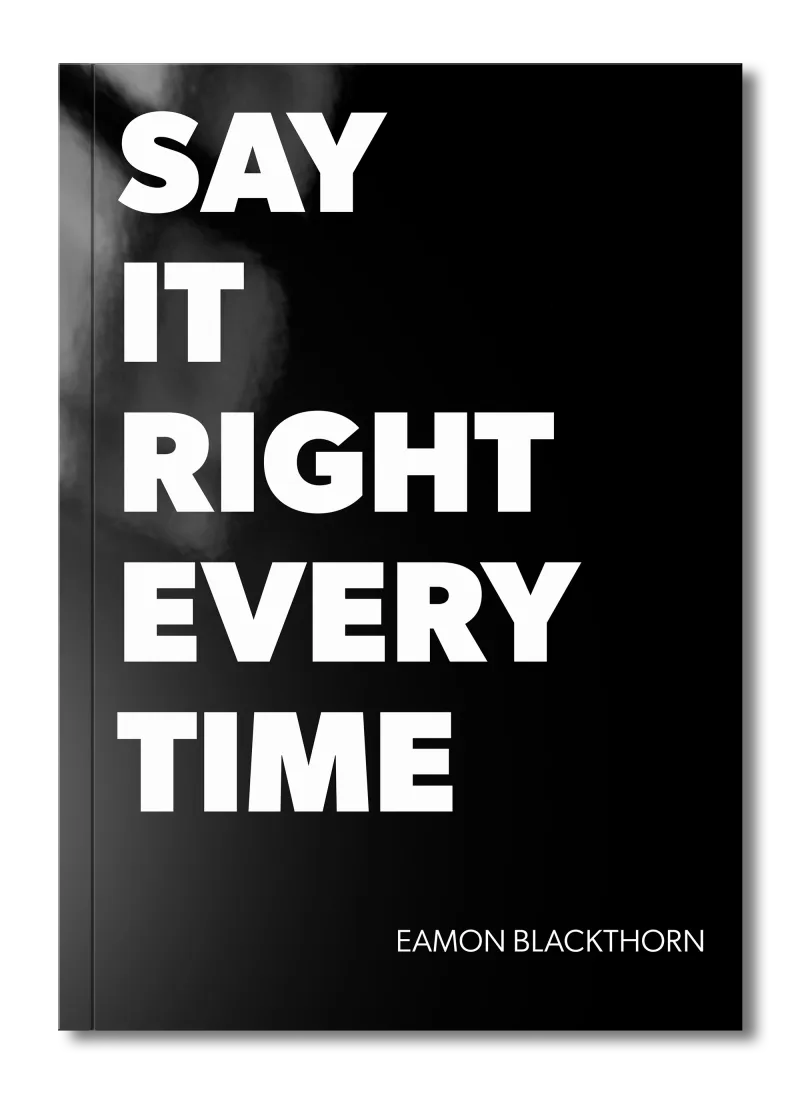
This is exactly the kind of scenario I break down in Say It Right Every Time. The chapter on purposeful structure gives you a framework for designing any communication, whether a meeting, an email, or a one-on-one, around a single clear outcome instead of a vague topic. Most people open a conversation with a subject. The best communicators open with a destination.
Never Be Lost
for Words Again
Get word‑for‑word scripts for the conversations that shape your life, from job interviews and negotiations to difficult talks with family and partners, so you always know exactly what to say and how to say it.
Never Be Lost
for Words Again
Get word‑for‑word scripts for the conversations that shape your life, from job interviews and negotiations to difficult talks with family and partners, so you always know exactly what to say and how to say it.
Key Takeaway
Before your next team meeting, write one sentence at the top of your agenda that completes this prompt: "By the end of this meeting, everyone will know exactly what to do about (blank)." If you cannot write that sentence, cancel the meeting and send an email instead. This single habit will eliminate more communication waste than any new platform you adopt this year.