
Skip to content
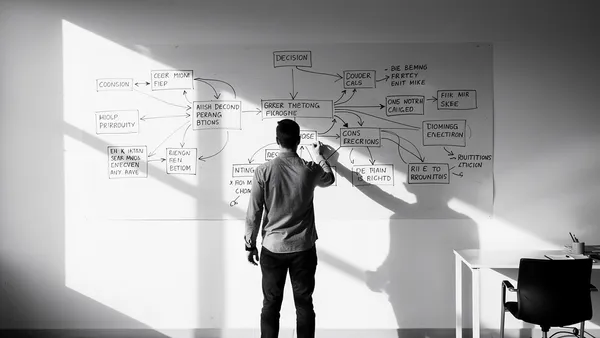
Illustration for Happy Employees vs. Honest Ones: What Surveys Miss
Source: Business News Nigeria

Happy Employees vs. Honest Ones: What Surveys Miss

Eamon Blackthorn
By Eamon Blackthorn Author of the best-selling book Say It Right Every Time
3 min read Workplace & Teams
Listen to Story BETA

What Happened

A former HR Business Partner conducted an employee engagement survey following a significant organizational change. The results revealed something companies rarely want to admit: high satisfaction scores do not equal a high-performing, communicatively healthy team. The story raises a question every manager should lose sleep over. Measuring happiness at work without measuring honest communication is like checking the paint job on a car with no engine.

The Communication Angle

Here is the question this story forces: What are you actually measuring when you survey your employees?

Most organizations treat engagement surveys as a report card on morale. They are not. They are a snapshot of how safe people feel telling you the truth. And those are completely different things. When a company rolls out a survey right after a "complex" organizational change (read: layoffs, restructuring, or leadership upheaval), they are not getting honest data. They are getting strategic silence. People answer those surveys with one eye on their job security, not one eye on the truth.

This is a fundamental communication failure, and it starts at the top. Leaders who commission surveys without first building psychological safety are asking a rigged question. The format broadcasts false openness. Employees hear: "Tell us how you feel." But the context underneath it says: "Tell us something we can use in a PowerPoint." The gap between what is said and what is heard destroys trust faster than almost any other workplace communication mistake.

The right move is to sequence the communication differently. Before a survey goes out, leaders need to have direct, unscripted conversations with teams. Not town halls with a Q&A at the end. Actual conversations where a manager sits across from three or four people and says: "I want to understand what is not working. I am not here to defend anything." That posture, communicated clearly and consistently, changes the data you collect.

Honest feedback is not something you extract with a survey tool. It is something you earn through repeated signals that telling the truth will not cost someone their job. Communication has to prove safety before it can demand candor.

This is exactly the kind of scenario I break down in Say It Right Every Time. The chapter on reading your audience before you speak gives you a framework for diagnosing the gap between what your listeners say and what they actually mean. When the context is fear, people edit themselves. A good communicator learns to spot that editing and creates the conditions where it stops happening.

Say It Right Every Time by Eamon Blackthorn

Never Be Lost
for Words Again

By Eamon Blackthorn

Get word‑for‑word scripts for the conversations that shape your life, from job interviews and negotiations to difficult talks with family and partners, so you always know exactly what to say and how to say it.

Go to Book PageFrom $9.97 USD
PaperbackHardcoverKindleAudiobook
Say It Right Every Time by Eamon Blackthorn

Never Be Lost
for Words Again

By Eamon Blackthorn

Get word‑for‑word scripts for the conversations that shape your life, from job interviews and negotiations to difficult talks with family and partners, so you always know exactly what to say and how to say it.

Go to Book PageFrom $9.97 USD
PaperbackHardcoverKindleAudiobook

Key Takeaway

Before your next employee survey goes out, schedule one small-group conversation with no agenda and no slides. Ask a single question: "What is one thing leadership consistently gets wrong?" Then listen without responding, defending, or explaining. What you hear in that room is more valuable than any survey result, and it tells you whether your team is actually engaged or just managing up.


More in Workplace & Teams

Illustration for How to Handle Interruptions from Senior Executives
Workplace & Teams

How to Handle Interruptions from Senior Executives

Getting interrupted or ignored by senior executives is one of the most common and demoralizing experiences professionals face in meetings. It happens constantly across industries: someone speaks up, a more powerful person talks over them or dismisses the point entirely, and the moment collapses. Most people freeze, shrink, or simply move on. That pattern has real consequences for careers and for the quality of decisions being made in those rooms.

Illustration for Internal Comms Fails When You Measure the Wrong Thing
Workplace & Teams

Internal Comms Fails When You Measure the Wrong Thing

A piece in PR Daily is arguing that internal communicators have spent decades operating like publishers: producing polished newsletters, managing editorial calendars, and measuring success by whether content went out on time. The argument is that this model is broken. The better model, the article says, is thinking like a product manager: obsessing over whether employees actually understand and act on information, not just whether they received it.

Illustration for How to Respond to a Workplace Complaint the Right Way
Workplace & Teams

How to Respond to a Workplace Complaint the Right Way

A workplace attorney recently went on record about how drastically the complaint landscape has shifted for employers. Workers now arrive at HR conversations armed with legal knowledge, lawyers are looping in earlier than ever, and the regulatory ground keeps moving. The message was direct: how a company responds to a complaint in the first hours matters more than any policy manual sitting on a shelf.

Illustration for AI Feedback Tools Need Manager Accountability
Workplace & Teams

AI Feedback Tools Need Manager Accountability

Companies are increasingly deploying AI tools to help managers write performance reviews, identify behavioral patterns, and score employees. The technology promises more consistent, better-prepared feedback conversations. But the shift raises a sharp question: when an algorithm shapes what a manager says about your work, who actually owns that conversation? Employees and HR leaders are now grappling with where the machine ends and human accountability begins.

Illustration for Happy Employees vs. Honest Ones: What Surveys Miss

Enjoyed this article?

Happy Employees vs. Honest Ones: What Surveys Miss

A former HR Business Partner conducted an employee engagement survey following a significant organizational change. The results revealed something companies rarely want to admit: high satisfaction scores do not equal a high-performing, communicatively healthy team. The story raises a question every manager should lose sleep over. Measuring happiness at work without measuring honest communication is like checking the paint job on a car with no engine.

Share it with someone who needs to hear this.

Share