

What Happened
Harvard Business School Online recently published a roundup of five strategies for handling workplace conflict. The piece positions itself as a practical guide for professionals navigating disagreements with colleagues and managers. It reflects a growing corporate hunger for structured approaches to difficult conversations, which tells you something important: most people still have no idea what to do when things get tense at work.
The Communication Angle
Here is the core problem with how most organizations teach conflict resolution. They treat it like a policy question instead of a communication challenge. Harvard's framework likely covers familiar ground: stay calm, listen actively, find common ground. Solid advice on paper. Almost useless in the room when your pulse is up and your colleague just blamed you in front of the team.
Compare that approach to what actually works. The professionals who handle conflict well are not the ones who memorized a five-step process. They are the ones who made a decision before the conversation started. They walked in knowing two things: what they needed from this exchange and what they were willing to give up to get it. That preparation is the real strategy. Everything else is window dressing.
The difference comes down to intention versus reaction. Most people enter conflict conversations in reaction mode. Someone says something that stings, and they respond to the sting instead of steering toward the outcome. The Harvard approach, like most corporate conflict frameworks, describes what a good conversation looks like from the outside. It does not give you the internal script you need to stay on track when your emotions are pulling you sideways.
What actually works is simpler and harder. Before the conversation, you decide on your position in writing. Not in your head. On paper. You write your goal in one sentence. You write the one thing you will concede. Then you walk in with those two anchors and you do not let the conversation drift past them. That is not a strategy you read about. That is a discipline you practice. And it beats a five-step framework every single time.
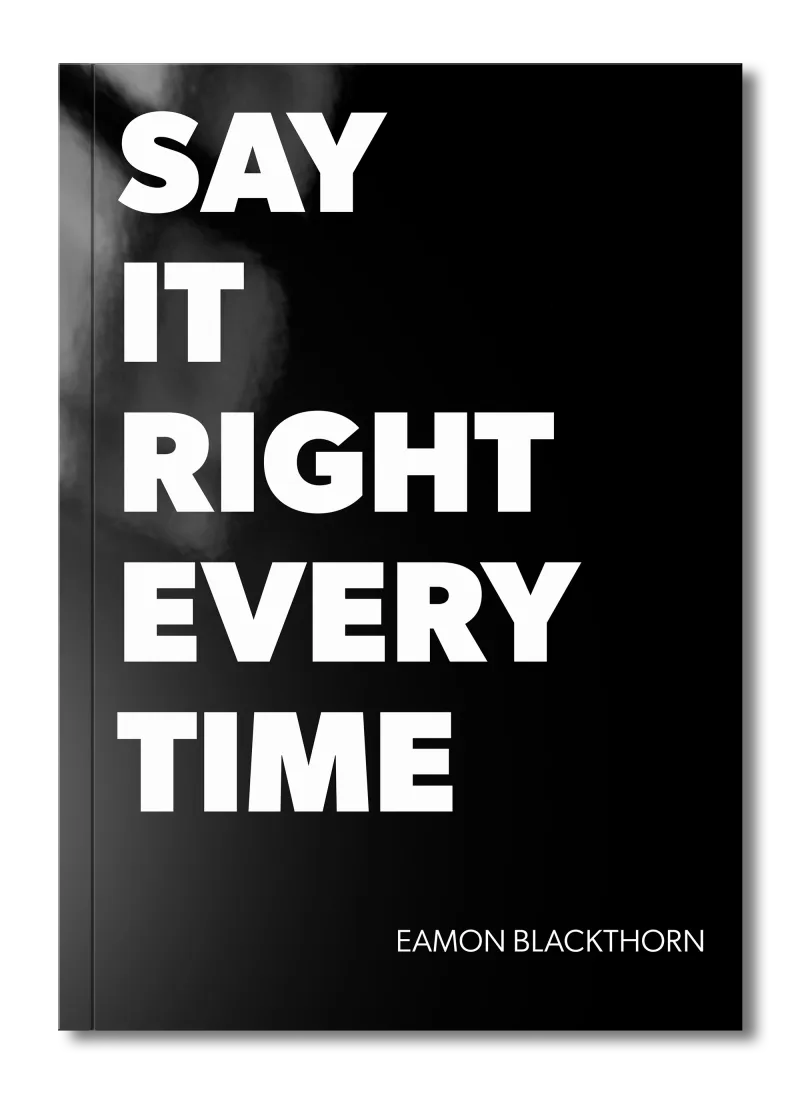
This is exactly the kind of scenario I break down in Say It Right Every Time. The chapter on high-stakes conversations gives you a framework for entering difficult exchanges with what I call an anchor statement: a pre-built, rehearsed sentence that keeps you oriented when the other person says something that could pull you off course. The Harvard model tells you what conflict resolution looks like. That chapter tells you how to stay in control of your own communication while it is happening.
Never Be Lost
for Words Again
Get word‑for‑word scripts for the conversations that shape your life, from job interviews and negotiations to difficult talks with family and partners, so you always know exactly what to say and how to say it.
Never Be Lost
for Words Again
Get word‑for‑word scripts for the conversations that shape your life, from job interviews and negotiations to difficult talks with family and partners, so you always know exactly what to say and how to say it.
Key Takeaway
Before your next conflict conversation, write down exactly this: "I need X. I am willing to give Y." One sentence each. Keep that paper in front of you if you can, or read it three times before you walk in. This single habit will do more for your conflict outcomes than any framework because it forces clarity before emotion enters the room. You cannot navigate a hard conversation without knowing where you are going.