
What Happened
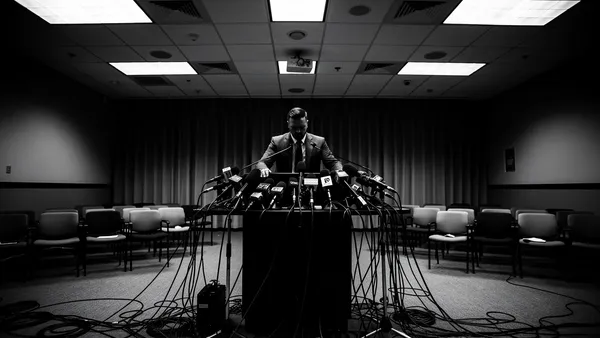
Getting interrupted or ignored by senior executives is one of the most common and demoralizing experiences professionals face in meetings. It happens constantly across industries: someone speaks up, a more powerful person talks over them or dismisses the point entirely, and the moment collapses. Most people freeze, shrink, or simply move on. That pattern has real consequences for careers and for the quality of decisions being made in those rooms.
The Communication Angle
Here is the question that actually matters: Why do executives interrupt some people and listen to others, when the information being shared is equally valuable?
The answer is not seniority. It is not gender, though bias is real. The answer, more often than not, is how you enter the conversation. People who get interrupted typically lead with context. They say "So I was reviewing the Q3 numbers and I noticed that if we look at the trend over the last two quarters..." and by word twelve, someone with more power has already stepped on their sentence. They buried the point. Executives interrupt because they do not yet know why they should listen.
The fix is simple but it requires discipline. Lead with the conclusion. State your position in the first sentence. "We have a retention problem and I know how to fix it." That sentence creates a reason to keep listening. It signals confidence. It respects the listener's time. Done correctly, it actually makes interrupting feel rude, because now there is a clear idea in the room that deserves a response.
The second part of this problem is what happens after the interruption occurs. Most people either go silent or awkwardly try to re-enter the conversation later, which comes across as weak. Instead, you need a re-entry phrase that is calm and direct. Something like: "I want to finish the point I was making, because it connects to what you just said." That sentence does three things. It asserts your right to speak. It shows you were listening to the interrupter. And it reframes your original idea as relevant to the current moment rather than a throwback to something that got stepped on.
The third issue is physical. People who get ignored in boardrooms often make themselves physically smaller. They look down at their notes, they speak toward the table, they do not hold eye contact. Presence is not a personality trait. It is a set of behaviors. Sit forward. Speak to the whole room, not just the person you are addressing. Hold eye contact a beat longer than feels comfortable. These are not tricks. They are signals that tell the room you belong there.
This is exactly the kind of scenario I break down in Say It Right Every Time. The chapter on high-stakes conversations gives you a framework for structuring what you say in the first thirty seconds, because that window is the only one that matters when the room is full of people with more power than patience. The difference between being heard and being dismissed almost always lives in those opening words.

Never Be Lost
for Words Again
Get word‑for‑word scripts for the conversations that shape your life, from job interviews and negotiations to difficult talks with family and partners, so you always know exactly what to say and how to say it.
Never Be Lost
for Words Again
Get word‑for‑word scripts for the conversations that shape your life, from job interviews and negotiations to difficult talks with family and partners, so you always know exactly what to say and how to say it.
Key Takeaway
Before your next senior meeting, write your key point as one sentence, fifteen words or fewer. That sentence goes first when you speak. Not second. Not after the background. First. Practice saying it out loud before you walk into the room so it comes out clean and confident, not rehearsed.