
What Happened
Remote work is no longer an experiment. It's the operating reality for millions of teams, and HR professionals are now under pressure to figure out what actually works in 2025. The conversation has shifted from "should we allow remote work" to "how do we lead people we rarely see in person." That shift exposes a problem most managers haven't solved: communicating with people you can't physically read.
The Communication Angle
Here's the lesson: distance doesn't break teams. Vague communication breaks teams.
Remote management became the great revealer. Every bad communication habit that a shared office could paper over, like a quick hallway correction or a visible nod of reassurance, suddenly had nowhere to hide. Managers who relied on physical presence to signal authority, urgency, or support found themselves invisible. And when a leader goes invisible, people fill the silence with their worst assumptions.
The core failure I see in remote teams is what I call intention drift. A manager sends a message thinking it conveys confidence and direction. The employee receives it and hears ambiguity or, worse, distrust. The gap between what you meant and what they heard widens every week because there's no shared physical context to close it. You can't fix this with more Slack messages. You fix it with precision.
Precision means three things in remote communication. First, every message should name the outcome you want, not just the task. Don't say "can you look into the Q3 numbers." Say "I need a one-paragraph summary of where Q3 went wrong by Thursday at noon so I can brief the board." That's not micromanagement. That's clarity. Second, you separate information from decision-making. Too many remote meetings are just people reading updates at each other. That's a waste of a synchronous moment. Use live time for decisions, debate, and alignment. Use written communication for information. Third, you give explicit emotional context. In person, tone is automatic. In writing, tone is invisible unless you name it. "I'm flagging this early because I want to solve it together, not because I'm worried about your performance" is a sentence that takes ten seconds to write and saves a week of anxiety.
HR strategies that work in 2025 are not complicated. They're just disciplined. The managers who lead remote teams well are not more empathetic or more tech-savvy than their peers. They're more deliberate. They treat every communication as a choice, not a reflex.
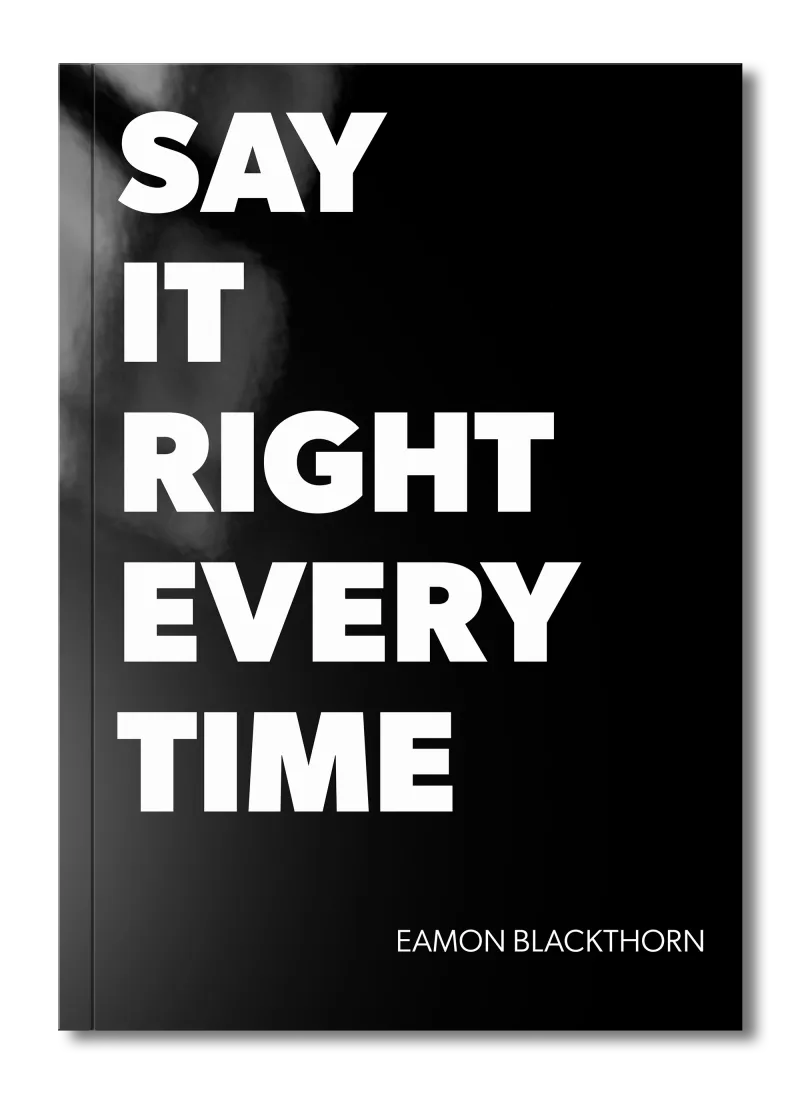
This is exactly the kind of scenario I break down in Say It Right Every Time. The chapter on intentional messaging gives you a framework for diagnosing the gap between what you think you said and what the other person actually received. That gap is where remote teams silently fall apart, and closing it starts with understanding how to build a message backward from the outcome you need, not forward from the information you have.
Never Be Lost
for Words Again
Get word‑for‑word scripts for the conversations that shape your life, from job interviews and negotiations to difficult talks with family and partners, so you always know exactly what to say and how to say it.
Never Be Lost
for Words Again
Get word‑for‑word scripts for the conversations that shape your life, from job interviews and negotiations to difficult talks with family and partners, so you always know exactly what to say and how to say it.
Key Takeaway
Before you send your next team-wide message or update, write down one sentence that answers this question: "What do I need my team to do, decide, or feel after reading this?" If you can't write that sentence, you're not ready to send the message. Rewrite until you can. Your message only earns its place if you know exactly what you need it to accomplish.