
What Happened
Two Michigan Democrats, Abdul El-Sayed and Haley Stevens, found themselves in a public confrontation that exposed a breakdown in coalition communication. What started as intra-party tension escalated into the kind of visible, damaging conflict that hands political opponents exactly what they need. The fallout drew national attention and raised serious questions about how political allies handle disagreement when the cameras are rolling.
The Communication Angle
Here is the lesson, stated plainly: the most dangerous conversation you will ever have is the one with someone who is supposed to be on your side.
When people argue with opponents, they prepare. They anticipate pushback. They control their tone because they know the stakes. But when the conflict is internal, with a teammate, an ally, a fellow traveler, the guard drops. People say things they would never say across the aisle because they assume shared values create a safety net. They do not. El-Sayed and Stevens proved that.
The specific failure here is what I call pressure without purpose. Both parties, from what played out publicly, were applying force without a clear endgame. They were not negotiating. They were not persuading. They were performing frustration. And performing frustration is the fastest way to lose an audience that was already on your side. Voters watching two Democrats tear into each other do not pick a winner. They disengage from both.
There is also a sequencing problem. Public conflict should always be the last resort, not the first expression. Whatever the underlying disagreement was, the moment it became a public spectacle, both parties lost control of the narrative. Someone else got to write the headline. That is always a loss. Before you go public with internal conflict, you need to have exhausted three things: a private direct conversation, a mediated conversation with a trusted third party, and a written record of where the disagreement actually stands. If you have not done all three, you are not ready to go public.
The fix is not to avoid conflict. Conflict is necessary. The fix is to contain it until you know what you want the outcome to be. Walk into any difficult conversation with one clear goal. Not two goals. Not a list of grievances. One outcome. When El-Sayed and Stevens lost sight of that, the conversation stopped being productive and started being a liability.
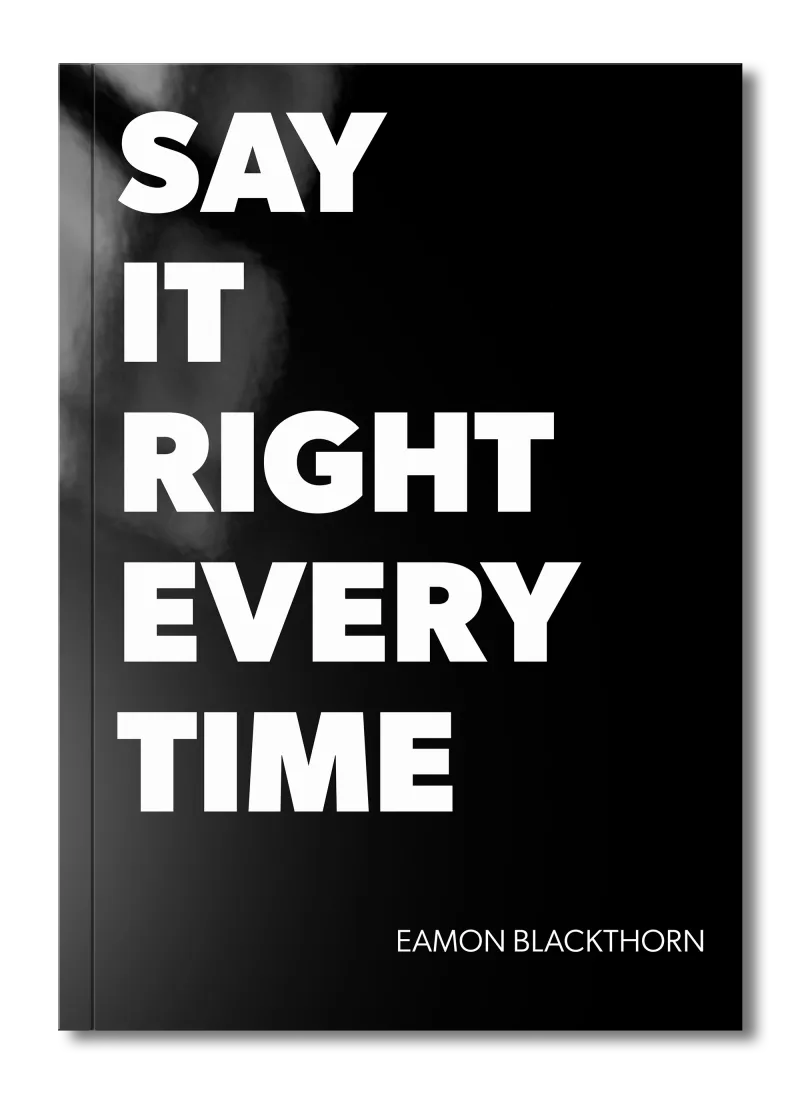
This is exactly the kind of scenario I break down in Say It Right Every Time. The chapter on high-stakes internal conversations gives you a framework for what I call "aligned conflict," which is how you disagree productively with someone whose goals overlap with yours without torching the relationship or the shared mission. The El-Sayed and Stevens situation is a textbook case of what happens when you skip that framework entirely and let emotion set the agenda instead of strategy.
Never Be Lost
for Words Again
Get word‑for‑word scripts for the conversations that shape your life, from job interviews and negotiations to difficult talks with family and partners, so you always know exactly what to say and how to say it.
Never Be Lost
for Words Again
Get word‑for‑word scripts for the conversations that shape your life, from job interviews and negotiations to difficult talks with family and partners, so you always know exactly what to say and how to say it.
Key Takeaway
Before your next high-stakes conversation with an ally or colleague, write down one sentence that completes this prompt: "I will consider this conversation a success if ______." Keep that sentence in front of you. Every time the conversation drifts toward score-settling or grievance-airing, that sentence pulls you back. One outcome. That is your anchor. Everything else is noise.