
What Happened
Forbes recently published a piece urging executives to sharpen their communication habits as a core component of leadership presence. The article positions strategic communication not as a soft skill but as a business-critical capability. The underlying message: how you say something in the boardroom matters as much as what you say, and most leaders are leaving influence on the table by ignoring this.
The Communication Angle
Let me show you two versions of the same executive. Same title, same resume, same meeting. The first walks in and says: "I think we probably need to maybe revisit our go-to-market approach given some of the challenges we've been seeing." The second says: "Our current strategy is losing ground. Here is what I want to change and why." One of these people sounds like a leader. The other sounds like they need permission to have an opinion.
That gap is executive presence, and it has nothing to do with charisma. It is entirely about communication structure. The first executive hedged, buried the point, and handed the room a reason to dismiss the idea before it landed. The second executive opened with a verdict, followed with a direction, and signaled that a decision had already been processed internally. The room now has to respond, not interpret.
The Forbes piece gestures at this but stops short of naming the real problem. Most professionals communicate the way they think, in real time, out loud, sorting through ideas as they speak. That is not communication. That is thinking with an audience. Strategic communicators do the sorting before they open their mouths. They walk in with a position, not a process.
Here is the practical difference. Before you speak in any high-stakes setting, you need three things locked in: the one point you are making, the one reason it matters to the people in the room, and the one thing you want them to do next. If you cannot answer all three before you speak, you are not ready. Full stop. The executives who get described as "commanding" or "clear" are simply people who do this preparation and everyone else does not.
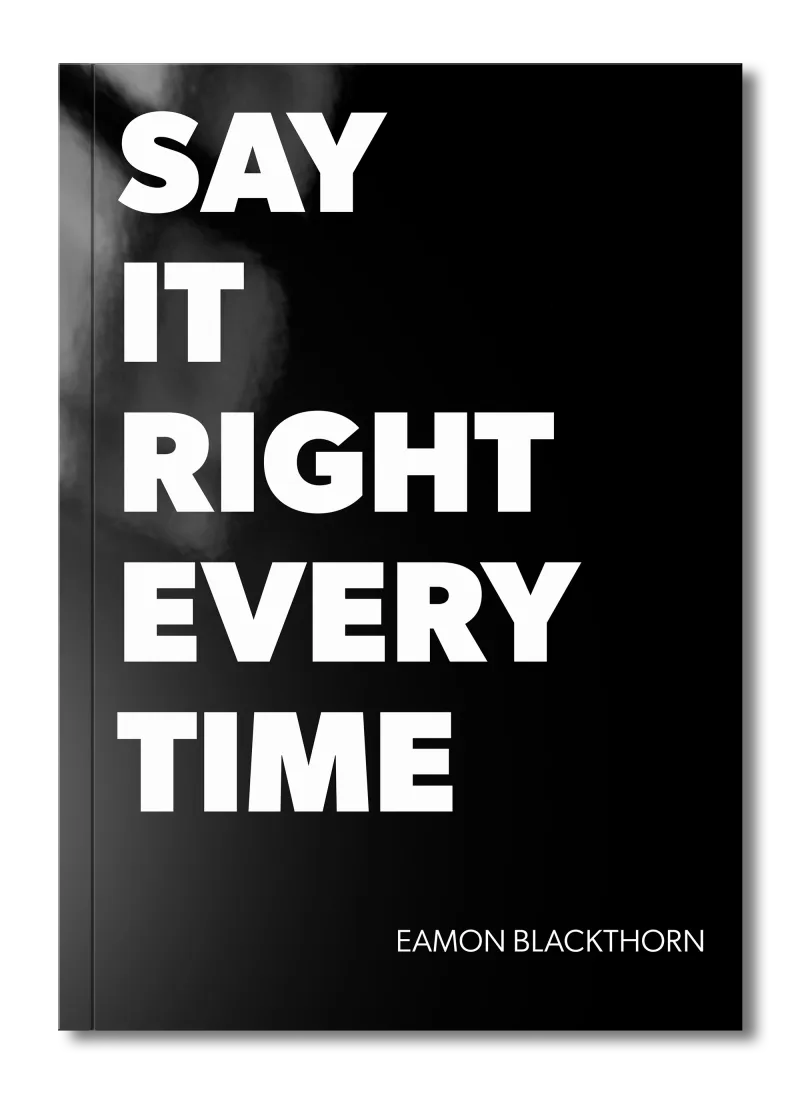
This is exactly the kind of scenario I break down in "Say It Right Every Time." The chapter on high-stakes clarity gives you a framework for stripping your message down to its load-bearing structure so that authority comes through before you even finish your first sentence. The goal is not to sound smart. The goal is to sound decided. Those are very different things, and the gap between them is where most executive careers stall out.
Never Be Lost
for Words Again
Get word‑for‑word scripts for the conversations that shape your life, from job interviews and negotiations to difficult talks with family and partners, so you always know exactly what to say and how to say it.
Never Be Lost
for Words Again
Get word‑for‑word scripts for the conversations that shape your life, from job interviews and negotiations to difficult talks with family and partners, so you always know exactly what to say and how to say it.
Key Takeaway
Before your next meeting where you need to influence a decision, write this down on paper: "My position is (blank). It matters because (blank). I need them to (blank)." Three sentences. Do not go into the room until you can say all three cleanly in under 30 seconds. That single habit will change how you are perceived faster than any presentation training or executive coach ever will.