
What Happened
OpenAI lost 14 executives in 2026, a staggering number for any organization, but especially for one sitting at the center of the most consequential technology race in modern history. The departures span roles across leadership, safety, and product. Whether these exits were forced, chosen, or somewhere in between, the volume alone sends a message. And that message is landing whether OpenAI intended it to or not.
The Communication Angle
Here is the comparison that matters: a company that controls its departure narrative versus a company that lets the departures speak for themselves.
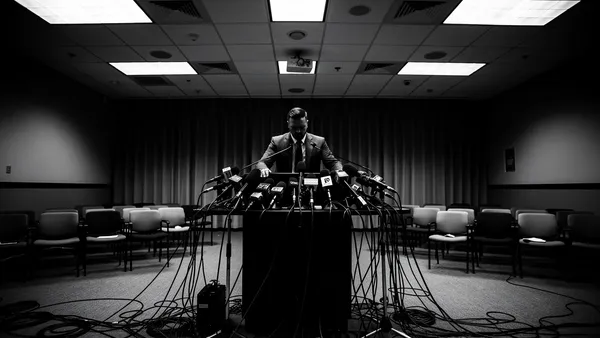
When a senior leader leaves a high-profile organization, there are exactly two communication paths. The first: the organization gets ahead of it. They release a statement, they frame the transition, they give context. The departing leader says something gracious. The company says something grateful. The story lasts one news cycle and dies. The second path: silence, or worse, a trickle of vague announcements that invite speculation. That speculation fills every void and it is never flattering.
OpenAI has been living on path two. Fourteen departures in a single year is not a rounding error. It is a pattern. And when you do not explain a pattern, the public explains it for you. Right now, the story being written by outsiders is "instability," "internal conflict," and "something is very wrong at the top." That story may be accurate. It may not be. But OpenAI's communication choices have given them no control over which version wins.
Compare this to how strong organizations handle mass departures. They batch the news when possible. They provide a coherent narrative: "We are restructuring for the next phase." They let one trusted spokesperson carry the message consistently. They do not let Business Insider compile a list of 14 names that reads like an organizational obituary. The contrast between those two approaches is not subtle. One looks like leadership. One looks like a fire drill.
The deeper communication failure here is not any single departure announcement. It is the absence of a consistent organizational voice across 12 months of leadership turnover. Every time a new name appeared on that list without a clear statement from OpenAI, the company ceded a little more credibility. Credibility is not rebuilt with a single press release. It erodes one quiet exit at a time.
This is exactly the kind of scenario I break down in Say It Right Every Time. The chapter on controlling the narrative in high-stakes moments gives you a framework for getting ahead of bad news instead of chasing it. Most leaders wait until they feel ready to talk. By then, the audience has already decided what to think. The skill is learning to speak early, speak simply, and repeat one clear message until it sticks. OpenAI had 14 chances to practice that skill in 2026. They did not take them.

Never Be Lost
for Words Again
Get word‑for‑word scripts for the conversations that shape your life, from job interviews and negotiations to difficult talks with family and partners, so you always know exactly what to say and how to say it.
Never Be Lost
for Words Again
Get word‑for‑word scripts for the conversations that shape your life, from job interviews and negotiations to difficult talks with family and partners, so you always know exactly what to say and how to say it.
Key Takeaway
Before the next person on your team leaves, voluntarily or otherwise, decide exactly one thing: what is the single sentence you want the remaining team to believe about this transition? Write it down before you announce anything. Every email, every all-hands comment, every conversation with a colleague should trace back to that sentence. If you cannot write the sentence, you are not ready to communicate the departure. Wait until you can.